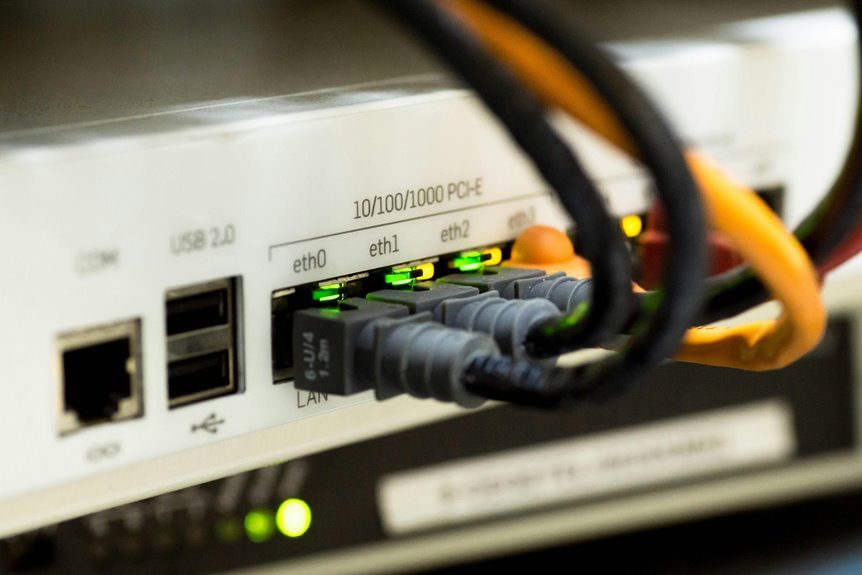

Advanced Internet Infrastructure 3852617113 represents a critical evolution in digital communication systems. By integrating fiber optics and cloud computing, it offers significant improvements in data transmission and latency reduction. This infrastructure not only meets the increasing demand for information but also enhances user experience through optimized resource utilization. As technology progresses, understanding the key components and future developments of this infrastructure becomes essential for comprehending its long-term impact on connectivity.
What Is Advanced Internet Infrastructure 3852617113?
Advanced Internet Infrastructure refers to the sophisticated systems and technologies that underpin modern digital communication and data transfer.
Central to this framework are fiber optics, which provide high-speed data transmission, enhancing network resilience.
This infrastructure is critical for ensuring stable connections and supporting the growing demands of users seeking unfettered access to information, thereby promoting a more liberated digital environment.
Key Technologies Driving Stability and Performance
The stability and performance of modern internet infrastructure rely heavily on a combination of key technologies that enhance network efficiency and reliability.
Cloud computing facilitates scalable resource allocation, ensuring that demands are met without latency.
Concurrently, network virtualization enables the decoupling of physical hardware from software, optimizing resource utilization and promoting flexibility, thereby driving overall system performance and stability in dynamic environments.
Benefits of Enhanced Internet Infrastructure for Users
As internet infrastructure continues to evolve, users benefit significantly from enhancements that improve speed, reliability, and accessibility.
These advancements lead to a superior user experience, characterized by reduced latency and uninterrupted connectivity.
Furthermore, connectivity enhancement facilitates seamless interactions in various applications, empowering users to engage more effectively in digital environments.
Ultimately, these improvements foster greater autonomy and freedom in a connected world.
Future Trends in Internet Infrastructure Development?
While the evolution of internet infrastructure is ongoing, several key trends are poised to shape its future development.
Edge computing will enhance data processing efficiency by bringing computation closer to users, reducing latency.
Simultaneously, quantum networking promises unprecedented security and speed, leveraging quantum principles to facilitate instantaneous data transfer.
Together, these advancements will redefine connectivity, empowering users with greater autonomy and performance.
Conclusion
In conclusion, the evolution of advanced internet infrastructure is essential for ensuring stability and efficiency in digital communication. By integrating cutting-edge technologies such as fiber optics and cloud computing, users benefit from improved data transmission and reduced latency. As these systems continue to develop, one must consider: how will future innovations shape our digital experiences? Embracing these advancements not only enhances connectivity but also fortifies the foundation of our increasingly interconnected world.


 By
By




 By
By